Tuesday, June 29, 2010

Sold By: Patricia McCormick


This was another Young Adult Realistic Fiction book I was required to read for class. In 2006 this book was a YA National Book Award Finalist and its no wonder due to the very real situations presented in the book. I read this book within 24 hours, but a big part of why was because it was so disturbing I just wanted to get it over with. Luckily it is an easy read and the "chapters" are more like pages with titles. I really liked this design of the book because it felt as though the main character, Lakshmi, was actually telling her feelings along with the story. Personally, I am on the fence on whether or not to have this book available to middle/high school students. The words were not too incredibly detailed, but detailed enough to really make me wince and want to cry uncontrollably. In fact, I read the first half at night before bed and I had terribly violent dreams that involved a man trying to steal me away to rape me from my true love. Unlike Lakshmi though, in my dream, I was able to beat the living daylights out of the bad man in my dream. Anyway, I say all this to show that even me, a 24 year old, had trouble coping with this book. Then again, it certainly raises awareness of how it is for younger girls in other countries; so I have to just say that I am on the fence.

If you are wondering what the story is about, well, I will tell you. The story starts out in Nepal where a young Lakshmi helps her 'ama' (which I believe is the word for woman) around the house with her baby brother and taking care of her stepfather, who apparently was kind enough to take them in after her real father died. Well her stepfather is lazy and selfish and only has 1 good arm. He uses all the money on his own pleasures and eats enough so that the women of the family sometimes go hungry for days. Below is an excerpt from the beginning of the book when she gets her "first blood" and her mother explains to her "Everything I need to Know" (That is the title of this page/chapter)...

"Before today, Ama says, you could run as free as a leaf in the wind.
Now, she says, you must carry yourself with modesty, bow your head in the presence of men, and cover yourself with your shawl.
Never look a man in the eye. Never allow yourself to be alone with a man who is not family. And never look at growing pumpkins or cucumbers when you are bleeding. Otherwise they will rot.
Once you are married, she says, you must eat your meal only after your husband has had his fill. Then you may have what remains.
If he burps at the end of the meal, it is a sign that you have pleased him.
If he turns to you in the night, you must give yourself to him, in the hopes that you will bear him a son.
If you have a son, feed him at your breast until he is four.
If you have a daughter, feed her at your breast for just a season, so that your blood will start again and you can try once more to bear a son.
If your husband asks you to wash his feet, you must do as he says, then put a bit of the water in your mouth.
I ask Ama why. 'Why,' I say, 'must women suffer so?'
'This has always been our fate,' she says. 'Simply to endure,' she says, 'is to triumph.'" (McCormick, p. 15, 2006)

That passage alone sets the tone for how women are treated and what the rest of the book is like. Anyway, after a monsoon takes over the rice crop for the season, Lakshmi's family is left needing money. Lakshmi wants to go work in the city as a maid and thinks this is what is happening when her stepfather comes to take her away. She is passed off to 3 different people, each paying a little more. She still has no idea what is happening to her until she is thrown into a room, locked in, and beaten until every part of her body is covered with welts. She then learns she must work off her debt to the fat women who owns the "Happiness House" she is working in. She doesn't find out until the end of the book that all the work and horrible things that she had done were for nothing because her family was never going to see that money. Through out the story there is talk of diseases and different absurd things these young girls endure in this horrible place. The ending leaves you with a sense of peace, although it is still VERY sad to know this is happening as we speak in the brothels of India. The Author has a note in the back about the research she did for the book and the figures are just horrifying.

These young girls and families will be placed on my prayer list from now on! It really makes you step back and evaluate your own life and see that the things you think are so horribly and pain enduring are not near what they could be in other places in the world. Books like this can really open your eyes, but like I said before, I am not sure about the idea of having a book like this in a middle school library. High school, maybe, but middle might be too soon.


Bibliography:
Mccormick, P. (2006). Sold. New York, NY: Hyperion Books.

Monday, June 28, 2010

Speak by: Laurie H. Anderson

This book was awarded: 1999 National Book Award Finalist; School Library Journal Best Books of the Year; and Booklist Editors' Choice. After reading (well, actually listening to) this book, I found out there was also a Lifetime movie made out of it starring Kristen Stewart.

The story is about a young girl, Melinda, who was raped at a high school party and then proceeded to call the cops (out of fear of what was happening to her) and ended up gaining a bad reputation (for the cops showing up and busting the party) because no one knew the real reason she called the cops. She enters her first year in high school as a reject that no one (including her ex-best friends) will talk to. She makes friends with a new girl who realizes Melinda is a loser and that the longer she hangs out with her the less popular she becomes. Melinda forces herself into silence refusing to speak or show up to her classes. When her parents (who are barely together) catch wind of her behavior they get angry at her and choose to ignore that there is nothing really wrong. With some other challenging school behavior the story has a happy ending when Melinda is finally able to SPEAK up.

This was a great young adult realistic fiction book that would be great to raise awareness to young teens about high school peer pressure and parties. This book could also show the importance of one finding their voice and the impact they can have on others who might be in the same boat, afraid to speak out.

Sunday, June 20, 2010

Catcher in the Rye By: J.D. Salinger


So I am finally don hearing "Old" Holden Caulfield rant about crazy, pointless things in his life..whew!! I had heard about Catcher in the Rye off and on through out my life. I have heard the name in movies, tv and even other books; but I never knew what it was about. I figured since it had so many reference it was this literary gold medal or something. Quite the opposite. I honestly have no idea why people like it so much or are even obsessed with it! It is all about a whiny teenager..Then again, that might be the one good thing I CAN say about the book. It demonstrates a few days in the life of a teenager or adolescent. Many young adults in similar positions might be able to identify with this book, but it does nothing but state the obvious. Maybe they love it because it shows that such crazy feelings and ways of looking at things that more than just 'you' deal with. My thing with the book was that there was no real plot. Nothing was accomplished, gain, or taught. Nothing bad or good happened. Heck, he never even called the girl he was talking about calling and/or seeing the entire book! Never even made contact! I feel that this book is not so influential and could potentially depress someone worse. Although in my teen years I would definitely identify with some of the things Holden felt and did, I can't see my young self really enjoying a book. 9 times out of 10 if I commit to reading a book it is because I want to hear a good story, or want to learn something new, or just feel something other than constant depression. This book did nothing for me!

Now, personally I hated the book, there are lots out there that feel quite the opposite. Here are some things I found (mostly through my learning at school).

A group of boys decided to take a raodtrip in Holden or Salinger's footsteps and record it. You can find that documentery here: Catching Salinger

Interesting fact: Between 1961 and 1982, The Catcher in the Rye was the most censored book in high schools and libraries in the United States. (Welllllllll DUH! Could it be the overuse of curse words? I mean, no one ever needs to say a curse word in every other sentence..Quite frankly I think it makes the story just that much more confusing because I have no idea what they are trying to actually say! I should have counted how many times he used the 'GD' word..gooooooodness!)
According to the American Library Association, The Catcher in the Rye was the 13th
most frequently challenged book 1990-2000.
For a list of banned books, see this.

Monday, April 5, 2010

The Little House by: Virginia Lee Burton


This story has a hidden message about the environment. This is the story of a little house that was built long ago in the country and was strong and sturdy. The man who built it said, "This Little House shall never be sold for gold or silver and she will live to see our great-great-grandchildren's great-great-grandchildren living in her." The house can see the city way off in the distance and wishes to see it. As time passes the area surround the house grows busier and busier. It starts with roads, then gasoline stations, roadside stands, other small houses, and more roads. Soon the countryside was divided into lots, then bigger houses, buildings, and more. The house got to where it could barely even see the sky. The trolleys turned into trains and the city was all around the little house. The city suffocated the little house until it was rarely even noticed, until one day the great-great-granddaughter saw the house and decided to move it out to the country. The little house never wanted to see the city again.

I feel this story is only the beginning of an ongoing cycle that happens in this day and age. The "country" is becoming smaller and smaller and more surrounded by cities and pollution. It is so important that we recognize this and do our best to appreciate the nature that surrounds us. This story would be great when teaching recycling.

Yes Day! by: Amy Krouse Rosenthal & Tom Lichtenheld


This is a cute story about the one day in a year that the answer to every question that the little boy asks is "yes". The little boy gets the answer "yes" to everything from "Can I have pizza for breakfast?" to "Does this day have to end?" I really enjoyed the concept of designating one day in the entire year that a child gets a 'yes' answer to any of their questions. The pictures in this story are lively and fun.
This would be a cute story for a younger crowd.

Sunday, March 28, 2010

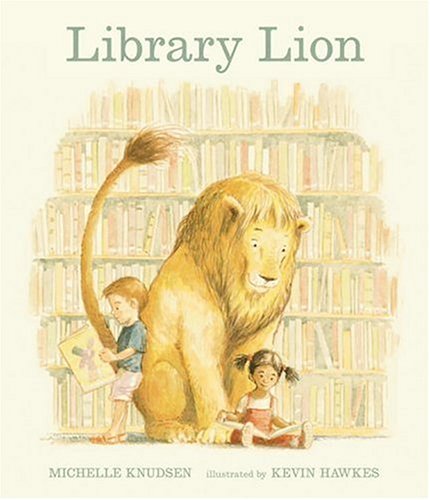
Library Lion: Written by Michelle Knudsen and illustrated by: Kevin Hawkes.
So this last section I did in my LIBS 5150 class was on picture books. From the outside it looks like this book was written a while ago, but it actually was published in 2006. Of course I had to choose this book to jump start my blog because it honors librarians :-).
Summary: One day a lion walked into a library. No one was sure what to do since there were no rules against lions in the library. After story time he roared and got in trouble with Miss Merriweather (the librarian). He was allowed to come back the following day if he was quiet, but he arrived early. Miss Merriweather gave him some chores to do; he dusted the encyclopedias with his tail, licked envelopes, and gave children a lift. The people were nervous, but then started liked the lion. He started getting there early to help Miss Merriweather. One day she was reaching high to get a book and fell and asked the lion to go get Mr. McBee. The lion ran off, and Miss Merriweather told him 'No running in the library'. When the lion arrived at Mr. McBee's desk (a fellow worker) he roared loudly at him, but Mr. McBee said he broke the rules, so the lion hung his head and left. Mr. McBee found Miss Merriweather and got her the help she needed. The next day the lion wasn’t there, nor the next, and the next. Miss Merriweather was very sad, so Mr. McBee went to look for the lion. He found the lion in the rain sad and told him it was ok to break the rules in some special cases. When the lion returned Miss Merriweather ran to the lion and when told "No running" she said "Sometimes there was a good reason to break the rules. Even in the library."

Ok, so it might sound crazy, but when Mr. McBee finds the lion in the rain it is THE MOST SAD thing I have seen in a while! The lion is SO pitiful looking! On a happy note, I love this story because, like I said earlier, it honors librarians. However, the librarian in this story is an older lady with gray hair, pulled in a bun, glasses, and a jacket with long skirt. I think this is how most people see librarians, but not me!

Yay for a new activity!

This blog will be dedicated to the books I am reading these days. Many will be children books considering that is the field I am headed to. As soon as I have my work done, I will be back!